



By P. Günter Reitzi OP, Promoter for Justice and Peace for the province of Saint Albert the Great
I would like to tell you about the various meetings I have attended as part of my work for ‘Dominicans for Justice and Peace’ and highlight three points in particular.
The first report concerns the refugee issue. No, please don’t say ‘not this again’ straight away! It was a Renovabis conference, and it dealt with issues relating to death. Now you might be wondering what this has to do with refugees?
There is a group on Lampedusa that deals with the handling of deceased refugees. People do not only lose their lives on the open sea. Deaths also occur quite frequently on the island itself. It is rarely possible to establish the identity of the deceased – even more so on the island than for those recovered from the sea.
Now, the first problem is this: there isn’t enough space on Lampedusa for burials. There is also a lack of a crematorium. So what is to be done with the bodies? They are transported to cemeteries on other islands or to the mainland. But this makes it impossible for fellow refugees to say goodbye.
But what is even more serious is this: the families left behind in their home countries are usually left in the dark forever. They neither know whether their relative has arrived anywhere, nor can they say goodbye. Even less do they receive the hoped-for financial support that would come from a possible job abroad.
Dealing with deceased refugees is therefore both a matter of treating them with dignity, at least after death, and a matter of providing potential support to their families.
This brings me to the session of the Commission on Crime Prevention and Criminal Justice at the UN in Vienna. As the Commission’s name suggests, the session focused, amongst other things, on how to prevent crime and its consequences. From this very broad range of topics, I would like to highlight two of the issues discussed.
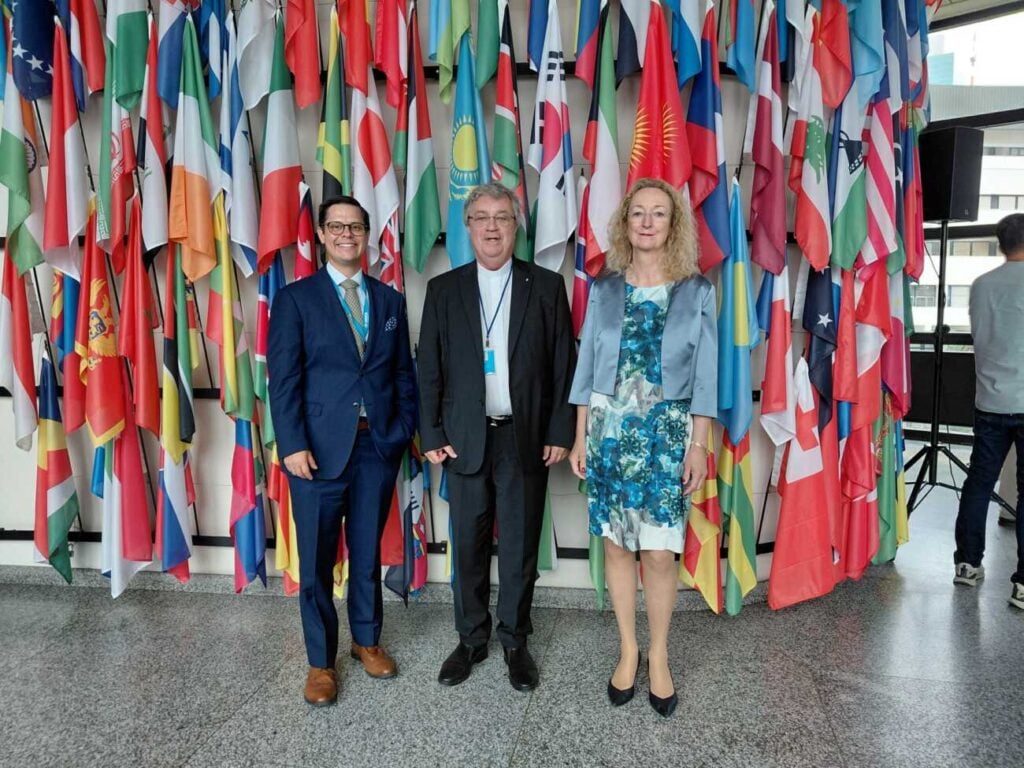
One session dealt with the issue of organ trafficking. Here, the question arose as to how illegal activities in this context could be stopped. So-called living organ donors receive only a fraction of the sum generated by the sale of the organ to recipients. This trade almost always takes place through shady channels, the owners of which are difficult or impossible to identify. Apart from the financial machinations, the donors, mostly from poor backgrounds, are subsequently left to fend for themselves without further medical care. Visits to the doctor are hardly possible, as on the one hand financial means are lacking, and on the other hand this would also reveal the illegal donation.
But recipients are also often left in the dark about the origin of the organs. Naturally, the hospitals we are familiar with are not involved in such schemes. But as we know, there are also ‘medical facilities’ outside our healthcare system. Providing care for recipients who find themselves in difficulty is equally challenging in such cases.
A solution? Officially maintained, internationally regulated lists covering all aspects of organ transplantation. The question of ethical justifiability is set aside in this case. At the very least, however, it would put a stop to fraudulent practices.
Finally, I would like to touch on something that could affect us all. It concerns so-called ‘shock calls’. Someone contacts you to say that a loved one has had an accident and urgently needs financial help. These calls are usually designed to cause such a shock that we are at risk of acting spontaneously and without thinking. Here is some good advice: to find out whether it really is a relative, ask for a detail that only the person in question could possibly know – for example: ‘What was the name of the family’s last dog?’ – Either there was no dog at all, or only a relative would know the name. Or: ‘Should I contact the sister or the brother?’ There are no siblings at all – only a close relative would know that. In any case, please proceed with the utmost caution and – in this instance! – err on the side of skepticism rather than credulity! The issue of romantic relationships formed online was also discussed.
One issue that came up in all areas was the situation of women. We are all too quick to assume that, although progress has sometimes faltered, women’s emancipation has indeed taken place. However, the rising number of femicides – that is, murders of women – tells a different story. Not only domestic violence but also threats in public spaces and women falling victim to terrorist activities are, unfortunately, a reality. Here, it is essential to encourage and guide the international community to comply with UN resolutions regarding gender equality and the protection of women. All those involved recognize that this is a long road ahead. Nevertheless, it is vital to take a clear stand on this issue and bring about rapid improvements.
Beyond these topics, issues relating to the financing of international terrorism and the criminal handling of environmental problems were also discussed. Unfortunately, illegal activities all too often take place at the expense of nature. This harms not only the current state of the environment but also future generations. There is much to say on this subject too, but it would exceed the space allotted to me. I shall be happy to return to this another time!
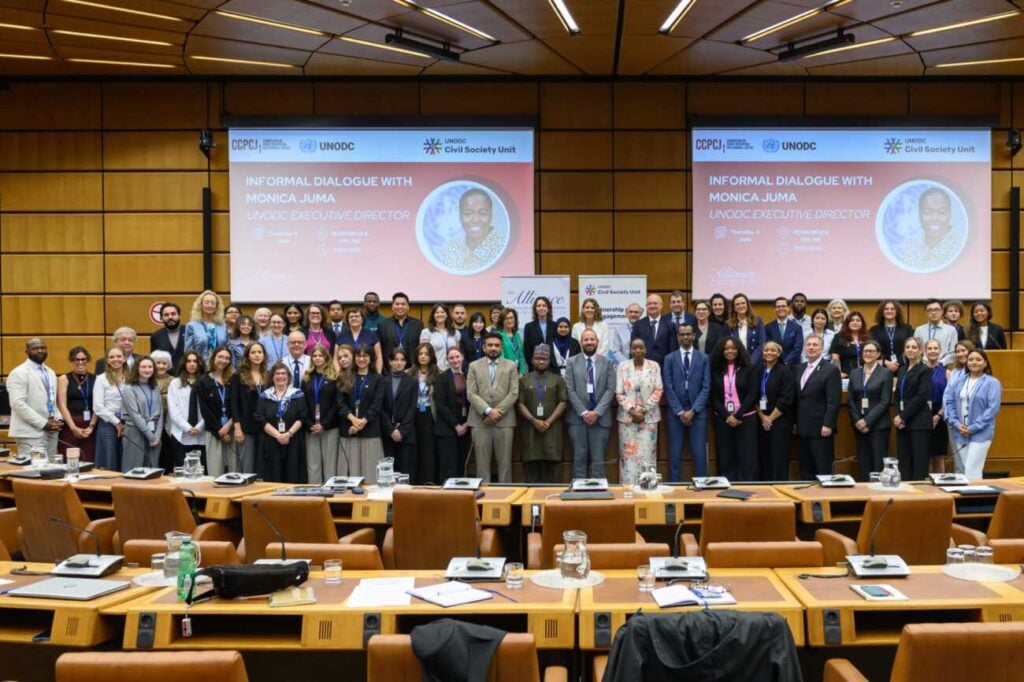
Over 600 representatives from around 130 different NGOs took part in this week’s CCPCJ. Our delegation was also represented by three members. In addition to the events mentioned above, we also took part in the Informal Dialogues with the new UNODC Executive Director, Ms Monica Juma, and the Chair of this year’s CCPCJ, Ambassador Rüdiger Bohn (GER).
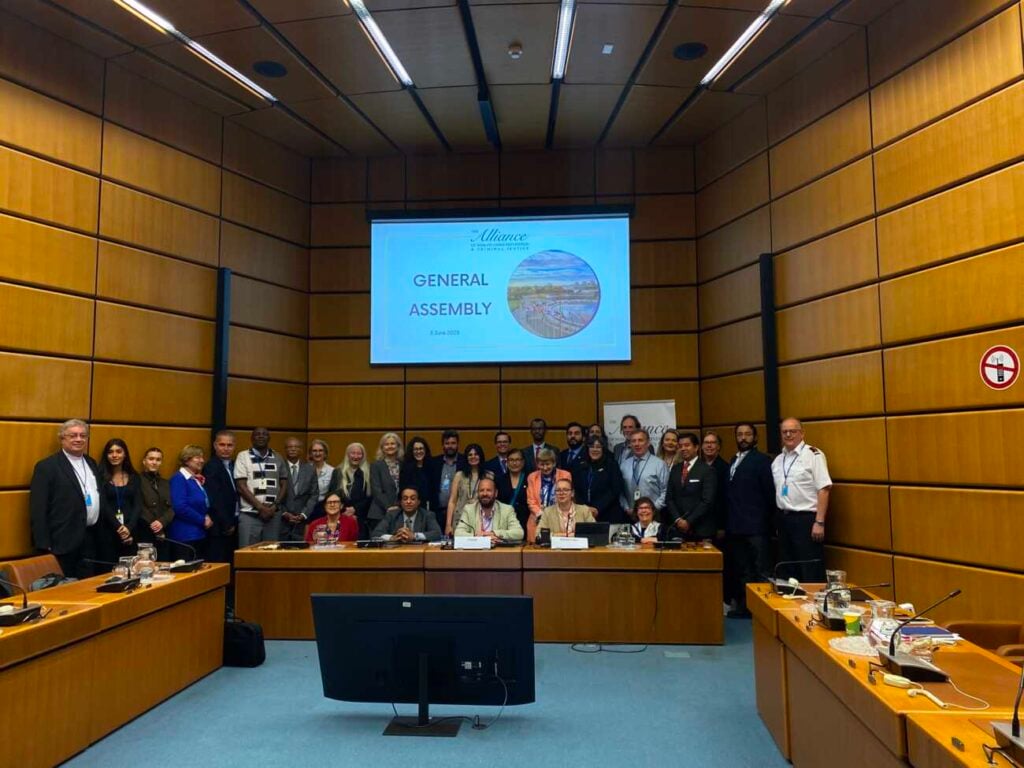
Another key highlight of the CCPCJ was the General Assembly of the Alliance of NGOs on Crime Prevention and Criminal Justice. Dominicans for Justice and Peace has been an active member since the Alliance was founded in 2020 and has also served on the Executive Board.
Before the summer break, the Constructive Dialogues on the topics of Trafficking in Persons, Smuggling of Migrants and International Cooperation and Technical Assistance will take place. We hope that proceedings will resume in the autumn with the 15th UN Crime Congress and the Conference of the Parties to the UN Convention against Transnational Organized Crime.
No Comments
Sorry, the comment form is closed at this time.