


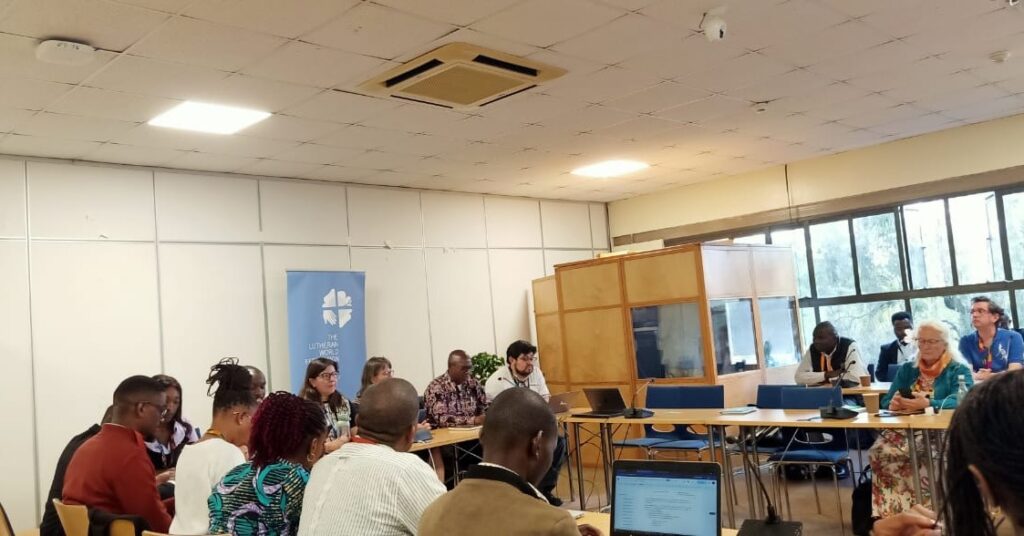
Dominicans for Justice and Peace, together with our partners from World Council of Churches (WCC), Lutheran World Federation, Caritas Internationalis, All Africa Conference of Churches, Anglican Communion, and Franciscans International organized this event at Seventh session of the United Nations Environment Assembly.
The event responded to UNEA‑7’s call for sustainable solutions by examining how faith‑based organisations supported communities facing climate disruption. Field research from Kenya, Chad, Cameroon, and Colombia showed how biodiversity loss, land degradation, and extreme weather displaced people and destroyed livelihoods. Faith actors were often first responders, blending humanitarian care, ecosystem restoration, and advocacy for justice.
Panellists presented faith‑led climate work from Kenya, Central Africa, and Latin America. Jonathan Kapanga, secretary general of the Kenya Evangelical Lutheran Church and member of the All Africa Conference of Churches, discussed climate‑induced displacement in Tana River and efforts to restore degraded land and strengthen community resilience.
Jean de Marie Orhaciyumya Kabunga, nature‑based solutions programme manager for Chad and Cameroon, presented a cross‑border project restoring ecosystems in Central Africa. Rachel Mash, coordinator of the Anglican Communion Environmental Network, described the Mothers Union Eco‑Champs initiative that trained women as environmental leaders. Henry Ramirez Soler shared lessons from protecting water and ecosystems in Colombia’s Chocó region, one of the world’s most biodiverse areas.
The panel argued that addressing climate mobility was central to any credible vision of a resilient planet. Faith‑rooted responses brought moral clarity and local trust that formal institutions often lacked. Elena Cedillo from the Lutheran World Federation and Grace Maghanga from the Anglican Communion moderated.
Policymakers, faith leaders, and environmental advocates heard how congregations were developing workable responses to the climate crisis and why these responses mattered for everyone.