What's New

Dominicans for Justice and Peace at COP30!


The recently concluded COP30 in Belém, a city strategically located between the North Atlantic Ocean and the Amazon, and home to many Indigenous communities, numerous plant and animal species and aquatic life, was like no other. 

The emphasis on the urgency of collective action for climate justice, along with the fervent participation of diverse groups – religious, civil, cultural, Indigenous, youth, states, and a host of others – gave a unique status to the gathering.

The ecumenical sessions and side events brought a spiritual dimension to the discussions. They  emphasized our divine mandate to care for God’s creation and our common home (Genesis 2:15), as well as the dangers – both physical and spiritual – of our failure to do so. Representatives of Indigenous communities reminded the gathering repeatedly that we must see the earth as a living organism and cultivate a “relationship” with the land to truly understand the harmful atrocities caused by those who see the land as something to take from, regardless of the damage done to the earth in the process of extraction.

The presence and active involvement of the Catholic Church in the process was especially noticeable and compelling. Besides the active participation of many Religious Orders and Congregations of women religious, the participation of the Catholic Bishops Conference of Brazil (CNBB), and many Bishops and Cardinals representing the continental bishops conferences of Latin America and the Caribbean (CELAM), Asia Pacific (FABC), and Africa (SECAM) was a statement by itself.

The bishops reiterated their joint statement they issued to the world ahead of COP30 titled A Call for Climate Justice and the Common Home. The statement, jointly signed by Cardinal Jaime Spengler O.F.M Archbishop of Porto Alegre, Brazil (President of CELAM),  Cardinal Felipe Neri Ferrao Archbishop of Goa and Daman, India (President of FABC), and Cardinal Fridolin Ambongo Besungu, O.F.M Cap. Archbishop of Kinshasa, Democratic Republic of the Congo (President of SECAM) called for climate justice and ecological conversion, and the rejection of false solutions, noting that climate change poses a profound threat to basic human rights, and disproportionately affects vulnerable populations who are the least contributors to climate crises. Besides, the bishops noted that climate change threatens vulnerable communities’ access to clean water, food, health, shelter, and their right to life and cultural identity. 

Emphasizing the urgency for a radical transformation of the global economic system to one that prioritizes people and the planet over profit, the Bishops urged the global community to take bold action, including phasing out fossil fuels, fulfilling the Paris Agreement, and addressing the “ecological debt” owed by wealthy nations. 

Discussion on “Just Transition” was a major part of the COP30 negotiations, highlighting  growing recognition of the need for climate action and a shift to a low-carbon economy that protects workers, communities, and as Pope Francis put it, people consigned to the margins of society. Such an economic system, while promoting sustainable livelihoods, must also ensure that the vulnerable groups are not further marginalized.

Our General Promoter for Justice and Peace pointed out, however, that we must ensure that our efforts at clean energy, and reduction of carbon footprints must not produce other forms of exploitation of vulnerable communities. The Democratic Republic of the Congo is an example where the search for cobalt to produce electric cars and other related “clean” technology has engendered land degradation, displacement of families from their homes, air pollution, and enslaved labor, especially of women and children. 

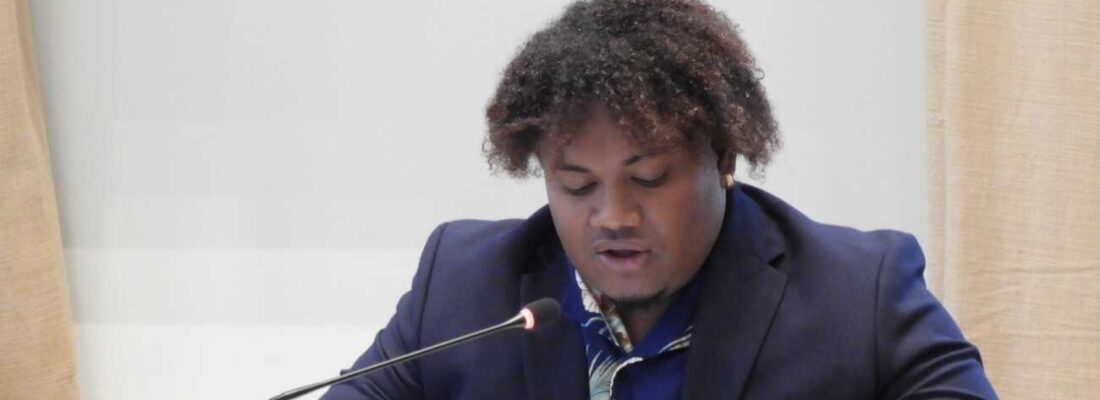
Thirty-eight members of the Dominican Family were active participants at COP30, making statements, joining the ecumenical gatherings, commenting at side events, participating in the global march, highlighting our lead in educating youth on climate change and impacts on human rights, and supporting the Indigenous communities in their activities.

An intriguing aspect of the gathering was the record high number of oil industry lobbyists at the climate conference. “Kick Big Polluters Out” (KBPO) coalition identified 1,602 accredited representatives from the global oil industry at the event. These lobbyists inserted themselves in many sessions, side events, and decision-making meetings gatherings, and quietly advanced their agenda with the aim to soften decisions in their favor. It would seem that their influence invariably impacted on the process and softened the expected outcomes of the gathering. 

Despite falling short of some expectations in terms of committing to bold steps to address the climate crisis, the adoption of the Belém Action Mechanism (BAM) for forests, finance, and just transitions offers a global platform to raise awareness on the integral nature of creation, the dignity of human life, the ecology, and the impact of human economic activities on basic human rights. The Amazon region illustrates in vivid ways, the interconnectedness of creation, and the need to embrace it as a matter of urgency. 


Aniedi Okure, OP

No Comments

Sorry, the comment form is closed at this time.
CONTACT US

Address

37/39 Rue de Vermont, C.P. 104, 1211 Geneva 20, Switzerland

Phone
EMAIL

    [honeypot honeypot-553 id:ho]